Do You Need a Panel Upgrade for an EV Charger in Vancouver?
Many Vancouver homeowners want to install a Level 2 EV charger but are unsure whether their existing electrical panel has enough capacity. Some homes can support an EV charger without major electrical changes, while others may require load management, a new circuit, or an electrical service upgrade.
The answer depends on your panel capacity, existing electrical loads, charger size, wiring condition and daily charging needs. A qualified electrician should assess these details before recommending an installation. Learn more about our EV charger installation services in Vancouver.
Does Every Home Need a Panel Upgrade?
No. Installing an EV charger does not automatically mean that you need to replace your electrical panel.
According to the BC Hydro home EV charger installation guide, homeowners should confirm that their electrical service has enough capacity before installing a charger. Many homes can support Level 2 charging, but every property is different.
Homes with electric heating, air conditioning, electric water heaters, hot tubs or other large electrical loads may have less available capacity. A professional assessment can determine whether the existing system can safely support an additional charging circuit.
What Does an Electrician Check?
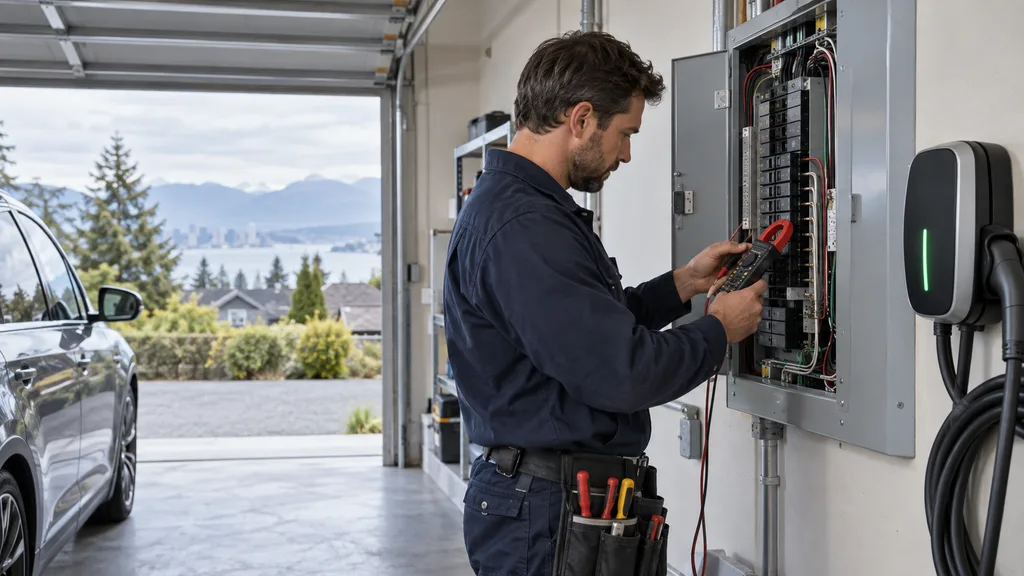
Before installing an EV charger, an electrician may review:
- The amperage rating of your electrical service
- Available space inside the electrical panel
- Existing breakers and connected electrical loads
- The distance between the panel and parking area
- The condition of the existing wiring
- The charging requirements of your vehicle
- The amperage and power settings of the proposed charger
- Whether the charger will be installed indoors or outdoors
Having physical space for another breaker does not always mean that the electrical service has enough capacity. The total electrical demand of the property must also be considered.
Can a 100-Amp Panel Support an EV Charger?
A 100-amp electrical service may be able to support an EV charger, but it depends on the other electrical equipment in the home.
For example, a home with gas heating and fewer large electrical appliances may have more available capacity than a home with electric heating, an electric range, a hot tub and air conditioning.
The charger does not always need to operate at its maximum possible output. In some situations, selecting an appropriate charging rate or using an energy management system may allow a Level 2 charger to work with the existing electrical service.
An electrician should complete the necessary assessment instead of making a recommendation based only on the number printed on the panel
Options When Electrical Capacity Is Limited
If your home does not have enough available capacity for a standard EV charger circuit, a full service upgrade may not be the only option.
Install a Lower-Output Level 2 Charger
Not every driver needs the fastest available home charger. A lower charging rate may still provide enough power to recharge the vehicle overnight while placing less demand on the electrical system.
The appropriate charging rate depends on the vehicle, daily driving distance and available electrical capacity.
Use an EV Energy Management System
An EV energy management system monitors the electrical demand of the property and adjusts or pauses EV charging when other major electrical loads are operating.
This type of system may allow some homeowners to install an EV charger without immediately upgrading the main electrical service. The equipment and installation must be suitable for the property and comply with applicable requirements.
Upgrade the Electrical Panel or Service
A panel or service upgrade may be recommended when the existing equipment is outdated, damaged, full or unable to support the required electrical load.
A service upgrade can provide additional capacity, but it may involve coordination with the electrical utility, permitting authority and other professionals. The project should be evaluated carefully before work begins.
Install a Subpanel
A subpanel can provide additional breaker spaces when the main panel is physically full. However, a subpanel does not automatically increase the total electrical capacity available to the property.
The overall electrical service must still be assessed before connecting an EV charger.
Is an Electrical Permit Required?
EV charger installations in British Columbia generally require an electrical installation permit. Technical Safety BC states that EV charger installations require permitting, although the responsible authority can depend on the location.
A licensed electrical contractor can determine the applicable permit process and arrange the required inspection for the installation.
Homeowners should confirm that the contractor is properly licensed and that the required permit is obtained before installation begins
How to Prepare for an EV Charger Assessment
Before contacting an electrician, collect the following information:
- Your vehicle make and model
- The charger brand and model, if already purchased
- Your preferred charger location
- A photograph of the electrical panel
- A photograph showing the route between the panel and parking area
- Information about major electrical appliances
- Whether you plan to purchase another EV in the future
Providing these details can help the electrician understand the project, although an onsite assessment may still be required.
BC Hydro also provides a useful list of questions to ask an EV electrician before selecting equipment or beginning an installation.
EV Charger Installation Process
A typical installation may include the following steps:
- Review the vehicle and charging requirements.
- Inspect the electrical panel and available capacity.
- Select the charger size and installation method.
- Discuss load management or panel upgrade options if required.
- Obtain the applicable electrical permit.
- Install the dedicated circuit and charging equipment.
- Test the charger and complete the required inspection process.
For more information about the complete service, visit our Vancouver EV charger installation page.
Frequently Asked Questions
Can I install an EV charger without upgrading to a 200-amp service?
Possibly. Some homes can support a Level 2 charger using their existing service. Other properties may benefit from a lower charging rate or an approved energy management solution. An electrical assessment is required to determine the appropriate option.
Does a subpanel increase my home’s electrical capacity?
No. A subpanel creates additional space for circuits, but it does not increase the capacity of the main electrical service.
Can I use a regular outlet to charge my electric vehicle?
Some vehicles can charge from a standard outlet, but charging is generally much slower than with a Level 2 charger. The outlet and circuit should be suitable for continuous EV charging.
How long does an EV charger installation take?
Installation time depends on panel location, wiring distance, charger location and whether additional electrical work is required. A straightforward installation may be completed more quickly than a project involving load management or a service upgrade.
Should I buy the charger before the electrical assessment?
It is often helpful to speak with an electrician first. The electrician can review your vehicle, panel capacity and charging needs before you select a charger.
Schedule an EV Charger Assessment in Vancouver
Lumax Electric provides EV charger assessments and installation services for homes and businesses across Vancouver, North Vancouver, West Vancouver, Burnaby and surrounding areas.
We can inspect your electrical system, review your charging requirements and explain whether your project may require load management, a panel upgrade or another installation approach.
Contact Lumax Electric to discuss your EV charger installation.